
Why Your Brain Craves Carbs When Daylight Shrinks—and What to Do About It
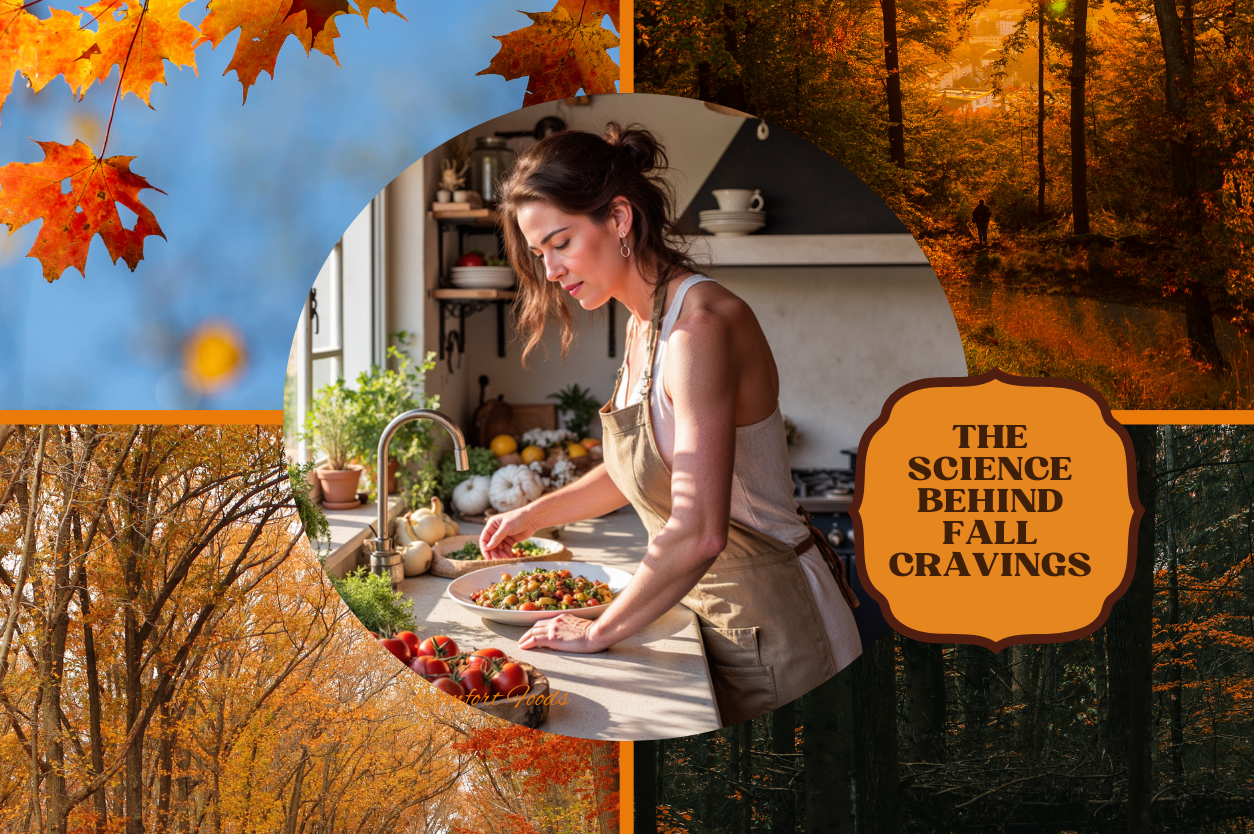
Understanding how our circadian rhythms play a role in our energy allows for energy management strategies (Created in Canva)
If you've been reaching for pasta, bread, or sweets more often as the days get shorter, you're not losing willpower—you're experiencing a predictable biological response that's been keeping humans alive for millennia.
And if you're a woman over 40, you're about to understand why this hits you harder than it does your male colleagues.
The Neuroscience Behind Your Fall Cravings
Your brain operates on a simple principle: survival first, everything else second. When daylight hours shrink, your neural chemistry shifts in ways that make carbohydrates almost irresistible. This is not just a human response.
In Alaska, with the signs of fall coming in August, I witnessed the intensity of nature’s drive to prepare for winter. The sea lions, seagulls, and bears were gorging on salmon. The caribou and moose were foraging nonstop, and the 14 black bears I saw along the road in one day were feasting on nutrient-rich clover.
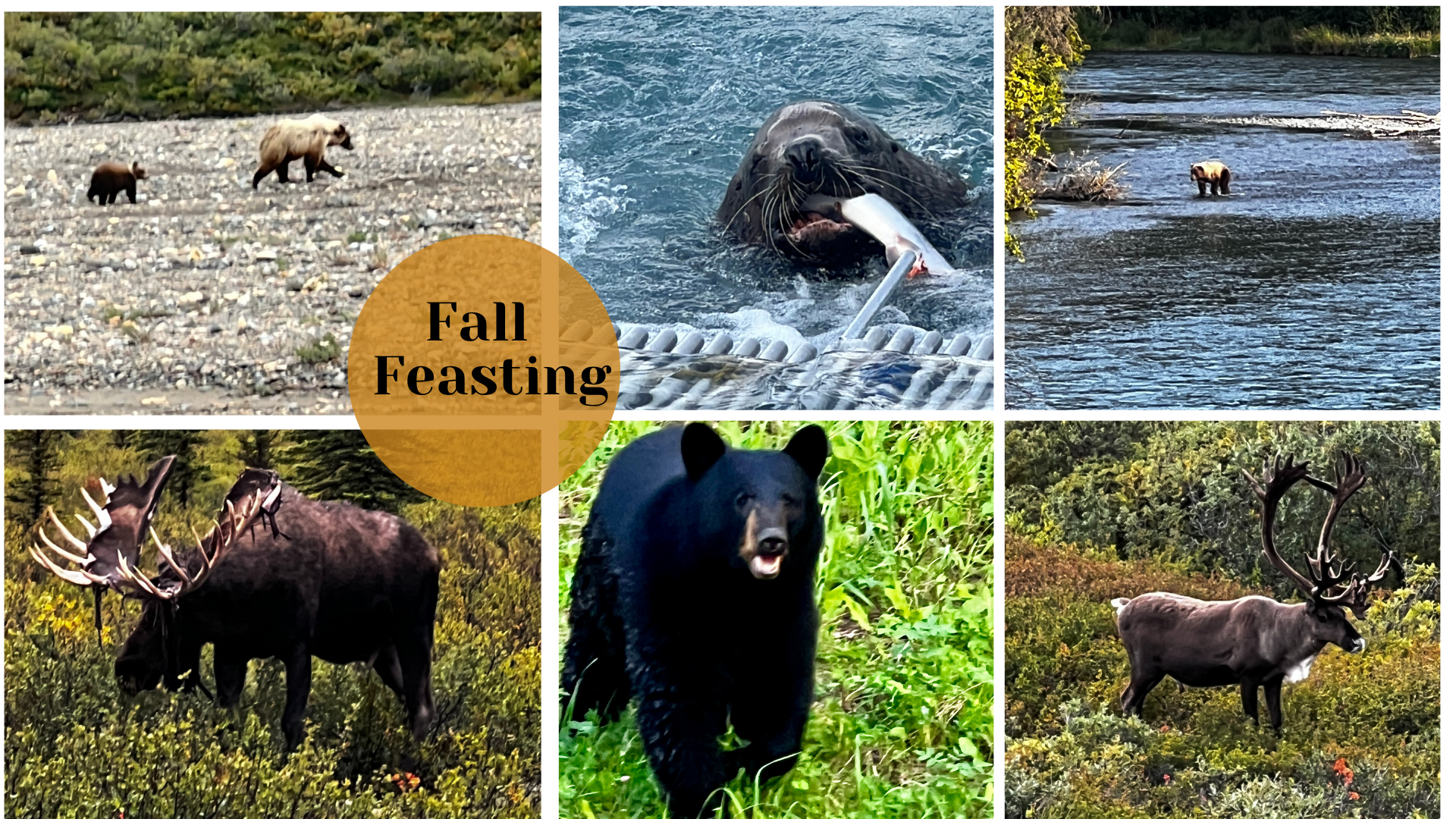
Alaska animals in August preparing for winter (photo credit-Neeli Clute)
I also had an all-too-close encounter with a mother grizzly and her cub (see video, thanks to onlookers). Forever etched in my mind will be her intent to find sustenance for herself and her cub. She had just been hunting a caribou that escaped, so she changed direction and crossed into the river bed I was hiking in. Seeing another caribou herd later in the direction she was heading, I believe she had caught their scent, and was tracking them. Luckily she didn’t see me as a consolation prize or a threat to her cub. She was huge, absolutely gorgeous, and on a mission. Her speed had her cub struggling to keep up. It was as if she heard the drum of winter approaching. We also feel the ancient call of fall.

Yes that's me encountering a mother grizzly in Denali National Park
Here's the seasonal cascade:
Less sunlight exposure → Lower serotonin production
Lower serotonin → Your brain seeks quick serotonin boosts
Carbohydrates → Fastest route to that serotonin hit
It's not a character flaw. It's biochemistry.
Serotonin isn't just your "happy chemical"—it also suppresses hunger by curbing appetite once eating begins. Satiation is one of your brain's primary appetite regulators. Depletion of serotonin increases intake and weight gain. When levels drop due to reduced light exposure, your brain essentially hits the panic button and demands the fastest fuel source available: simple carbohydrates.
Why Women “Bear” the Brunt
Research from UC Davis reveals a sobering reality: women are four times more likely to experience Seasonal Affective Disorder (SAD) than men. The symptoms aren't just mood-related—they include hypersomnia (sleeping a lot!), intense carbohydrate cravings, and weight gain that begin in fall, not winter.
This isn't just about feeling a little blue. It's about fundamental changes in brain chemistry that affect:
Energy regulation (hello 3 PM energy crashes)
Appetite control (those pasta cravings aren't random)
Sleep quality (even when you get 8 hours, you wake up tired)
Cognitive performance (where did you put those keys again?)
The evolutionary explanation? Women historically needed to store energy for potential pregnancy and breastfeeding during scarce winter months. Your brain is still running that ancient programming. Right, mama bears?!
The Hidden Cost of "Innocent" Cravings
Harvard research reveals something most people don't realize: the average holiday weight gain is actually quite modest—about 0.8 pounds between Thanksgiving and New Year's. That sounds manageable, right?
Here's the catch: most people never lose it.
Those 0.8 pounds become sticky. They compound year after year, contributing to the gradual weight creep that sneaks up on busy professionals. After a decade? That's 8 pounds of accumulated "seasonal adjustments."
But here's what's even more concerning for your cognitive health: the same biochemical shifts driving those cravings are also affecting your mental clarity, decision-making capacity, and stress resilience right when you need them most for year-end deadlines and holiday logistics.
Your FITBRAIN Fall Action Plan
The goal isn't to fight your biology—it's to work with it strategically. Here's how:
🌅 Rejuvenation: Light Therapy Protocol
Take a walk in the sun, ideally within the first hour of waking, even on cloudy days. Brain Boss Power Up: commit to an additional outdoor midday walk. You're not just boosting mood—you're recalibrating your circadian rhythm and stabilizing serotonin production.
Why it works: Bright light exposure triggers serotonin synthesis and helps regulate melatonin timing, reducing both cravings and that "tired but wired" feeling that derails evening routines.
🥩 Nourish: Protein-First Strategy
Lead with protein at breakfast (aim for 25-30 grams) and pair afternoon snacks with fiber. Think Greek yogurt with berries, or apple slices with almond butter instead of reaching straight for crackers or cookies.
Why it works: Protein stabilizes blood sugar and provides steady amino acid availability for neurotransmitter production. Fiber slows glucose absorption, preventing the blood sugar spikes that trigger more cravings.
🏃♀️ Active Exercise: Buffer Workouts
Schedule two "buffer" workouts per week through December. These aren't punishment for indulging—they're insurance against seasonal cognitive drift. Even 20-30 minutes of brisk walking counts.
Why it works: Exercise increases BDNF (brain-derived neurotrophic factor), which supports neuroplasticity and mood regulation. It also improves insulin sensitivity, helping your body process those occasional treats more efficiently.
The Bigger Picture: Your Mental Bandwidth
This isn't really about willpower or weight management. It's about protecting your mental bandwidth during one of the year's most cognitively demanding periods.
When your brain is constantly negotiating carbohydrate cravings, fighting low energy, and managing mood dips, it has fewer resources available for strategic thinking, creative problem-solving, and the kind of clear-headed decision-making that makes Q4 successful instead of just survivable.
By understanding and working with your seasonal biology instead of against it, you're not just preventing holiday weight creep—you're optimizing your cognitive performance when it matters most.
Your Next Step
The best time to implement these strategies was three weeks ago. The second-best time is right now, before the holiday season gains momentum.
How I can help: Utilize my free Fall Food Guide for an Agile Intellect. This guide categorizes foods into those to include, avoid, or consume in moderation during the Fall.
These guidelines are tailored to support your body’s natural processes, align with the season, and provide optimal nourishment for your brain. Bonus recipe included: Ideal recipe for grounding and warming for seasonal transition at the end of this guide. (Roasted Root Vegetable Medley)
Ready to turn seasonal challenges into cognitive advantages?
↳ Get the Fall Food Guide for an Agile Intellect
Because your brain deserves better than running on fumes and fighting biology until January.
Have questions? ↳ Book a Clarity Call
I love the change of seasons. It's a chance to embrace the rhythm of life, but it need not be to your detriment. Building our reserves is incredibly important for sustainable and regenerative progress. Understanding how our circadian rhythms play a role in our energy is important to embrace as we plan ahead. Your body and mind are looking out for your best interests. Are you?
References
Galima, Shannon V., et al. "Seasonal Affective Disorder: Common Questions and Answers." American Family Physician, vol. 102, no. 11, 2020, pp. 668-672.
Helander, Elina E., et al. "Weight Gain over the Holidays in Three Countries." New England Journal of Medicine, vol. 375, no. 12, 2016, pp. 1200-1202.
Reid, Karine J., et al. "Timing and Intensity of Light Correlate with Body Weight in Adults." PLOS ONE, vol. 9, no. 4, 2014, e92251.
Rosenthal, Norman E., et al. "Seasonal Affective Disorder: A Description of the Syndrome and Preliminary Findings with Light Therapy." Archives of General Psychiatry, vol. 41, no. 1, 1984, pp. 72-80.
University of California, Davis Health. "Seasonal Affective Disorder: Winter Blues and Self-Care Tips to Get Ahead of Symptoms." UC Davis Health Blog, 2023, health.ucdavis.edu/blog/cultivating-health/seasonal-affective-disorder-winter-blues-and-self-care-tips-to-get-ahead-of-symptoms/2023/11.
Yanovski, Jack A., et al. "A Prospective Study of Holiday Weight Gain." New England Journal of Medicine, vol. 342, no. 12, 2000, pp. 861-867.