
Why Age & The Diversity of Minds Are Your Competitive Edge
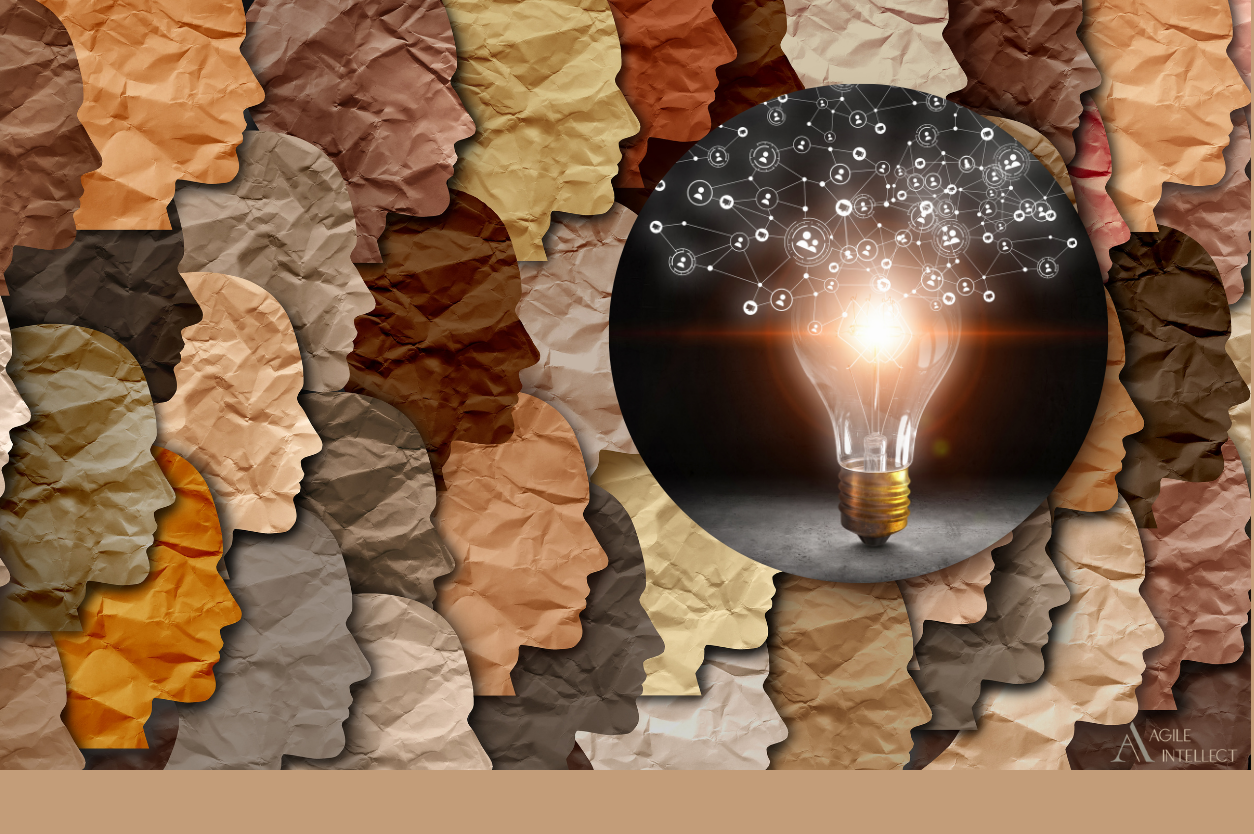
The High-Performance Secret Hiding in Plain Sight (designed in Canva)
How Diverse Teams Unlock Strategic Value Through Cognitive Diversity
If you walked into a team meeting today and everyone thought exactly like you—same age, same background, same wiring—would you celebrate or panic? Most of us would panic.
Yet when it comes to building teams, we often default to "culture fit" and "fast learners," code words that favor youth and typical minds while sidelining the very diversity that drives innovation, resilience, and bottom-line results. Oct 9th was Ageism Awareness Day, and it's time we talk about the elephant—or rather, the brilliant, experienced, neurodiverse human—in the room.
Why am I continuing this conversation? Because it’s not just a day, it’s an ongoing problem.
The research is unequivocal: diverse teams, especially those spanning generations and neurocognitive profiles, outperform homogenous ones.
And if you're still hiring like it's 1995, you're leaving serious money, talent, and competitive advantage on the table.
Let's dig into the science—and the opportunity—behind intergenerational and neurodiverse collaboration, anchored in the FITBRAIN element of Interact: the brain-boosting power of connection (especially across difference.)
The Myth That Won't Die (But Should)
Here's what many managers still believe:
✖ Older workers are less productive.
✖ They can't learn new tech.
✖ They're costly and inflexible.
✖ Neurodivergent employees need "accommodations" that slow teams down.
Here's what the evidence actually shows:
📊 Meta-analyses find no overall decline in job performance with age—and in some cases, small improvements, especially on objective and peer-rated measures (National Academies of Sciences).
📊 Firm-level data show no productivity penalty for older employees; experience often raises quality and reduces avoidable errors (Center for Retirement Research at Boston College).
📊 Older workers have substantially lower turnover than younger counterparts, translating to higher retention, lower replacement costs, and continuity of institutional knowledge (National Bureau of Economic Research).
📊 Age-diverse teams report improved operational performance and innovation when supported by inclusive climates and intentional management (University of Colorado Denver; European research synthesis).
As for neurodiversity?
Companies like Microsoft, SAP, and JPMorgan Chase have documented measurable gains—higher quality output, innovative problem-solving, and retention improvements—from hiring autistic, ADHD, and dyslexic talent in roles aligned with their cognitive strengths.
So if the data is this clear, why does age and neurodiversity bias persist?
Why We Get It Wrong: Bias, Not Biology
The answer is rater bias (see inset) and cultural narratives, not capability gaps.
🧠 Supervisor ratings often decline with employee age, even when objective measures don't—pointing to stereotypes about "trainability" and "tech-savviness" rather than actual performance differences (NIH reviews).
🧠 Field experiments show significant age discrimination in hiring callbacks, particularly affecting older women, despite zero evidence that older applicants perform worse (NBER audit studies).
🧠 Persistent "health pessimism" and tech-aversion myths are reinforced by media outliers (think: physically demanding jobs) and generalized to knowledge work, where judgment, pattern recognition, and contextual decision-making—cognitive strengths that increase with experience—matter most.
Meanwhile, neurodiverse candidates face parallel stereotypes—"difficult to manage," "not team players"—that ignore documented strengths in pattern detection, sustained focus, creative problem-solving, and quality control.
The upshot? We're screening out top talent based on outdated heuristics, not performance data.
What is "Rater Bias"? Rater bias is the systematic distortion that occurs when a person evaluating someone else's performance lets irrelevant factors—like age, gender, race, appearance, communication style, or even assumptions about "culture fit"—influence their judgment, rather than relying solely on objective evidence of performance.
In other words: Your boss thinks they're rating your work. They're actually rating their stereotype of people like you.
Interact: The Brain Science of Cognitive Diversity
Here's where FITBRAIN's "Interact" element comes in.
Great minds grow greater together—but how they grow depends on the diversity of those minds. Neuroscience research shows that conversation and collaboration are cognitive cardio: they strengthen empathy, creativity, perspective-taking, and collective intelligence.
But here's the kicker: homogenous teams create echo chambers.
When everyone shares the same generational reference points, problem-solving heuristics, and neurological wiring, you get groupthink, not innovation.
Intergenerational and neurodiverse teams, by contrast, offer:
🔹 Complementary cognitive strengths: Younger workers bring speed, digital fluency, and comfort with ambiguity; older workers bring pattern recognition, risk assessment, and institutional memory. Neurodivergent colleagues add hyperfocus, systems thinking, and novel problem-solving angles neurotypical brains might miss.
🔹 Error detection and quality improvement: Experience-based judgment catches mistakes before they compound; neurodiverse detail orientation spots what others overlook (Stanford Center on Longevity; organizational performance studies).
🔹 Mentoring and knowledge transfer: Bidirectional mentoring—where seasoned employees share tacit expertise while younger colleagues offer tech fluency—strengthens succession pipelines, accelerates onboarding, and improves retention across age groups (Art of Mentoring reviews).
🔹 Resilience across market conditions: Age-diverse teams combine novelty-seeking with stability-seeking, improving adaptability when conditions shift (longevity research from Stanford).
In short: every conversation across generational and neurocognitive lines enhances neuroplasticity. Your brain—and your team's collective intelligence—literally expands when you interact across differences.
What About Cognitive Decline? Let's Get Nuanced
Okay, but what about real age-related cognitive shifts—processing speed, working memory, the brain fog some women experience during perimenopause?
Fair question. Here's the science:
🧠 Fluid abilities (processing speed, working memory) do decline gradually with age, while crystallized abilities (knowledge, vocabulary, expert judgment) rise into later life and support roles requiring experience and contextual decision-making (NIH cognitive aging reviews).
🧠 Perimenopause can bring transient memory and attention challenges for some women, often mediated by sleep disturbance, mood, and vasomotor symptoms—all modifiable factors that respond to workplace supports like flexible scheduling, temperature control, and access to evidence-based care (Frontiers in Aging Neuroscience; NIH menopause-cognition research).
🧠 Individual variability is huge: performance hinges on role fit, health, training access, and job design—not chronological age. Well-designed work environments that reduce cognitive load and align tasks with strengths allow older employees to capitalize on accumulated expertise while offsetting fluid declines (Colorado State workplace cognition study).
The takeaway? Midlife cognitive shifts—including menopause-related symptoms—are manageable workplace design challenges, not capability ceilings. Small environmental tweaks (fewer interruptions, clearer priorities, decision aids) and health supports stabilize performance across all ages.
And neurodivergent employees? When roles align with cognitive strengths—data analysis for pattern-focused thinkers, creative strategy for nonlinear minds—performance often exceeds neurotypical peers.
The Playbook: How to Unlock the Upside
Ready to turn diversity into strategic advantage? Here's your action plan:
1. Hire for Skills, Not Stereotypes
✅ Use structured, age- and neurodiversity-blind screening to reduce bias.
✅ Focus on demonstrated capabilities and role fit, not proxies like "digital native" or "culture fit."
✅ Cite the data: No meta-analytic evidence supports age-based performance declines (NIH; Center for Retirement Research).
2. Design Roles Around Complementary Strengths
✅ Leverage crystallized expertise for quality control, risk management, client stewardship, mentoring.
✅ Pair speed and novelty-seeking (younger workers) with judgment and institutional memory (older workers).
✅ Align neurodivergent strengths—hyperfocus, systems thinking, detail orientation—with roles that reward those traits.
3. Build Cognitive Ergonomics Into Workflow
✅ Reduce unnecessary interruptions and clarify priorities to lighten executive load.
✅ Provide checklists, decision aids, and protected focus time to support working memory across all ages and neurocognitive profiles.
✅ Offer flexible scheduling and environmental controls (temperature, lighting, noise) to accommodate symptom variability during perimenopause and neurodivergent sensory needs.
4. Invest in Continuous Learning & Bidirectional Mentoring
✅ Provide structured, role-relevant upskilling to keep tech and process knowledge current across generations.
✅ Implement reverse mentoring: younger employees teach digital fluency; seasoned colleagues share tacit expertise and risk frameworks.
✅ Normalize knowledge-transfer rituals—case reviews, shadowing, collaborative problem-solving—to capture institutional memory while accelerating ramp-up.
5. Cultivate Inclusive Team Climates
✅ Train managers to recognize and counter age and neurodiversity bias in assignments, feedback, and promotion decisions.
✅ Build norms that value diverse communication styles, decision-making processes, and problem-solving approaches.
✅ Measure and reward collaboration quality and knowledge sharing, not just speed or "culture fit."
The Mental Bandwidth Connection: Building Cognitive Reserve for the Long Game
Here's the thing: inclusive, well-managed teams don't just perform better today—they build cognitive reserves for tomorrow...at all ages.
Cognitive reserve is your brain's resilience cushion—the neural flexibility and backup networks that protect against anxiety, age-related decline, stress, and even dementia risk. And one of the most powerful ways to build it? Rich, diverse social interaction and lifelong learning.
When you Interact across generations and neurocognitive profiles, you:
✔ Strengthen neural plasticity through novelty and perspective-taking.
✔ Deepen emotional and social intelligence, key buffers against cognitive decline and mental illness.
✔ Practice mental flexibility, the cornerstone of adaptive problem-solving in volatile environments.
This is exactly what the Mental Bandwidth Solution teaches: how to optimize the eight crucial elements of brain health and performance (FITBRAIN) to expand your cognitive capacity, resilience, and longevity—individually and collectively.
Because a fit brain doesn't just help you thrive in a volatile world.
It helps your team thrive. Your organization thrive. Your career and legacy thrive.
The Mental Bandwidth Solution provides:
🎯 A customizable 12-week framework built on neuroscience and 15,000 CEO insights across 60 countries.
🎯 Practical, science-backed strategies for managing cognitive load, enhancing focus, leveraging sleep and exercise, and cultivating lifelong learning.
🎯 Tools to build cognitive reserve proactively—so you and your team meet every challenge like a BOSS, now and decades from now.
Bottom Line: Diversity Isn't "Nice to Have." It's Your Competitive Moat.
The evidence is overwhelming:
✅ Age-diverse teams are more productive, more stable, and more innovative when managed with intention.
✅ Neurodiversity unlocks problem-solving and quality advantages neurotypical teams miss.
✅ Inclusive collaboration strengthens cognitive reserve and team resilience in ways homogeneity never will.
So in recognition of Ageism Awareness Day;
Ask yourself: Are you building teams that reflect the full spectrum of human cognitive potential—or are you leaving your competitive edge on the table?
Because every conversation across differences is a mental performance enhancer. Every mentoring exchange is neural plasticity in action. Every inclusive hiring decision is an investment in innovation, retention, and long-term performance.
Your mind isn't just your compass—it's the architect of your future. Build wisely. Build inclusively. Build with the full spectrum of human brilliance.
Sources
"Age and Job Performance." National Academies of Sciences, Engineering, and Medicine, National Academies Press, 2020, www.ncbi.nlm.nih.gov/books/NBK588538/.
"Are Older Workers Good for Business?" Center for Retirement Research at Boston College, crr.bc.edu/are-older-workers-good-for-business-2/.
"The Age Divide: Why Mentoring Is Key to Retaining and Supporting Older Workers." Art of Mentoring, artofmentoring.net/the-age-divide-why-mentoring-is-key-to-retaining-and-supporting-older-workers/.
"Aging Workforce: Leveraging the Talents of Mature Employees." Stanford Center on Longevity, longevity.stanford.edu/wp-content/uploads/2017/01/AgingWorkforceProceedings.pdf.
"Evidence for an Age Discrimination Audit Study." National Bureau of Economic Research, www.nber.org/system/files/working_papers/w21669/w21669.pdf.
"Job Performance and Age: A Meta-Analysis." Work, Aging and Retirement, vol. 8, no. 2, 2022, pp. 208–25, academic.oup.com/workar/article/8/2/208/6574297.
"Job Performance and Age: Curvilinear Patterns by Performance Type and Job Complexity." Work, Aging and Retirement, vol. 10, no. 2, 2024, pp. 156–72, academic.oup.com/workar/article/10/2/156/6649561.
"Leveraging Age Diversity for Organizational Performance." Journal of Applied Psychology, 2020,pure.eur.nl/files/48279458/Li-et-al_2020_Preprint_JAP_Leveraging-age-diversity-for-organizational-performance.pdf.
"Managing a Multigenerational Workforce: Best Practices." Harvard Business Review, Oct. 2023, hbr.org/2023/10/best-practices-for-engaging-a-multigenerational-workforce.
"Menopause and Cognition: What the Evidence Shows." Frontiers in Aging Neuroscience, vol. 15, 2023, www.frontiersin.org/journals/aging-neuroscience/articles/10.3389/fnagi.2023.1158001/full.
"Menopause, Cognition and Work Performance: A Systematic Review." NIH Public Access, pmc.ncbi.nlm.nih.gov/articles/PMC10842974/.
"Perceived Age Discrimination and Health Outcomes." NIH Public Access, pmc.ncbi.nlm.nih.gov/articles/PMC6460336/.
"Skills-Based Hiring and Older Workers." Urban Institute, Mar. 2022, www.urban.org/sites/default/files/2022-03/Skills-Based%20Hiring%20and%20Older%20Workers.pdf.
"Stereotypes, Prejudice and Discrimination Against Older Workers." Frontiers in Sociology, vol. 6, 2021, www.frontiersin.org/journals/sociology/articles/10.3389/fsoc.2021.686645/full.
"Supporting Age Diversity in Teams." NIH Public Access, pmc.ncbi.nlm.nih.gov/articles/PMC9578724/.
"Team Age Diversity and Performance." University of Colorado Denver, www.ucdenver.edu/docs/librariesprovider68/default-document-library/jmna-articles-bonuscontent-2.pdf.
"Turnover Among Older Workers." National Bureau of Economic Research, www.nber.org/system/files/working_papers/w26597/w26597.pdf.
"Well-Designed Workplaces Boost the Aging Brain." Colorado State University SOURCE, source.colostate.edu/a-well-designed-workplace-boosts-the-aging-brain-says-international-csu-study/.