
The Relationship Recession Starving Your Brain
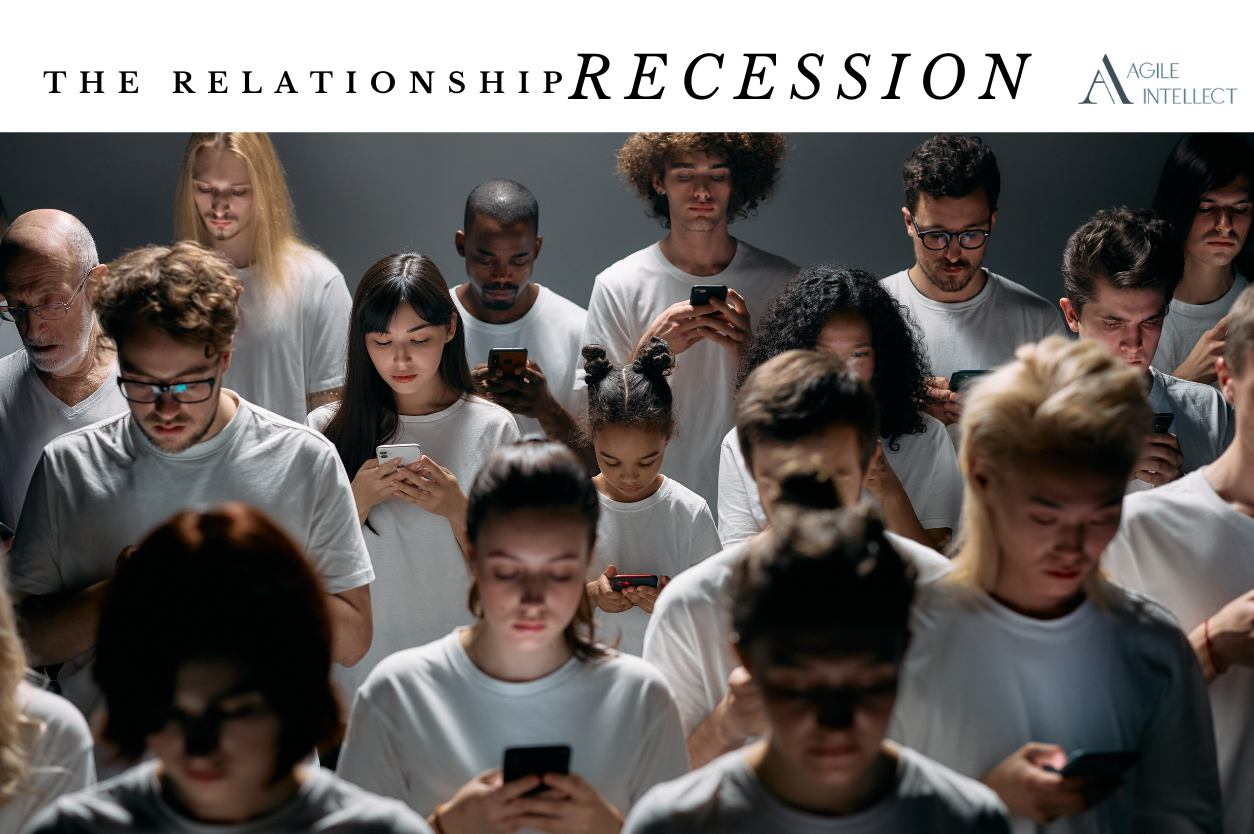
Text-based communication has its place, but "Just Text Me" Is a cognitive disaster. (Canva)
As relationship-building skills atrophy, your brain loses access to a powerful resource for resilience, creativity, and mental bandwidth expansion.
Part 3 of The MENTAL BANDWIDTH SERIES: A 5-Part Journey
Series: Crucial Conversations: Why Mental Bandwidth is Your Most Valuable Asset in 2025
Series Description: In one transformative week, five critical conversations revealed an uncomfortable truth: the world is changing faster than we're equipped to handle. This series explores what happens when education can't keep pace with technology, when human connection atrophies in a digital age, when AI companies race ahead without looking back—and what it means for your brain's capacity to navigate it all.
Want to Read More in the Series?
Part 1: The Learn-It-All Mandate: Advice from a Top Tech Exec
Part 2: The Education Gap That’s Bleeding into Your Workplace
"How do you build a business if you're not meeting people? How do you build culture if you're never in the office with other human beings?"
Kristen Blessman of the Denver Metro Chamber Leadership Foundation wasn't being nostalgic. She was describing a crisis unfolding in real-time.
Post-COVID, relationship-building skills are atrophying.
Her young professionals group—people in their early 30s—aren't showing up to networking events like previous generations. One participant noted that colleagues into their 40s find phone calls terrifying.
"Don't call me. Text me."
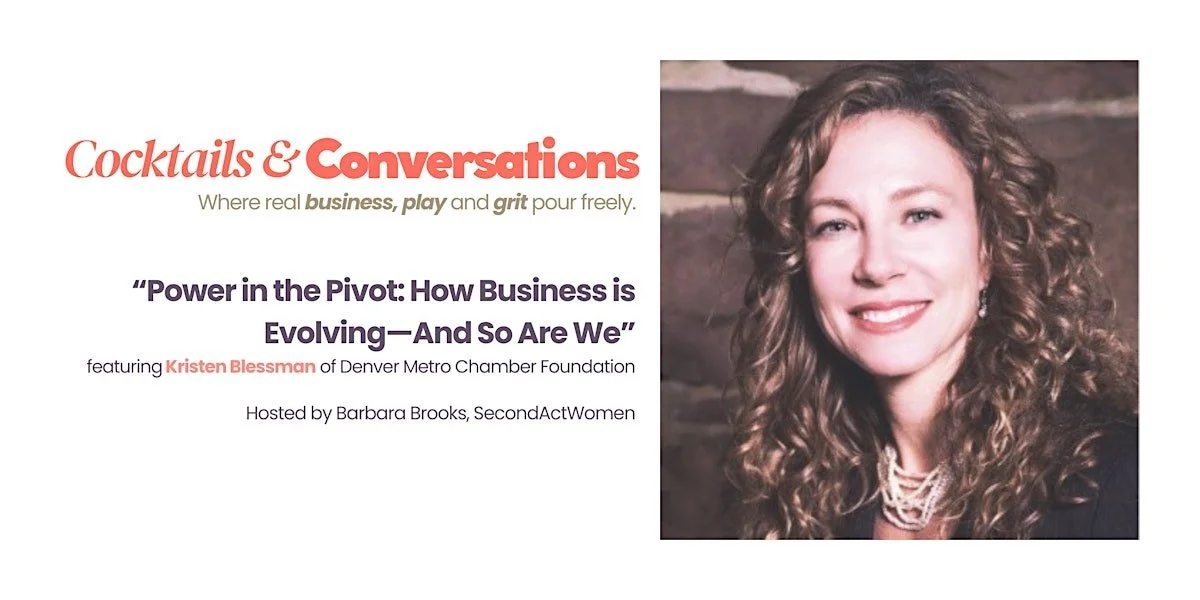
Kristen Blessman- Executive Vice President of the Denver Metro Chamber of Commerce
The Neuroscience of What We're Losing
Here's what made my brain light up during this conversation: we're not just losing business networking skills. We're losing access to one of the brain's most powerful mechanisms for expanding mental bandwidth.
Let me explain.
Your brain doesn't operate in isolation. According to Lisa Feldman Barrett's research, your brain constantly predicts and prepares for what's next based on past experience—and social connection fundamentally shapes those predictions.
When you engage in meaningful face-to-face interaction, your brain:
1. Regulates more efficiently. The physical presence of supportive others literally helps your nervous system calm. This is called "co-regulation"—and it's not optional for optimal function. It's a biological necessity.
2. Generates new perspectives. Conversation introduces cognitive diversity. Your brain encounters mental models different from your own, forcing flexible thinking that builds cognitive resilience.
3. Practices empathy and theory of mind. Reading facial micro-expressions, vocal tone, body language—these are high-order cognitive skills that atrophy without use. Texting doesn't provide the neural workout your social brain needs.
4. Creates psychological safety. Trust built through repeated in-person interaction reduces threat response, freeing up mental bandwidth for creativity and problem-solving instead of defensive vigilance.
When relationship-building skills atrophy, you're not just losing professional advantage. You're losing cognitive infrastructure.
The Mental Bandwidth Cost of Isolation
Think about what happens when you try to solve complex problems alone versus in conversation with a trusted colleague.
In isolation:
You cycle through the same mental loops
Stress compounds without external regulation
Blind spots remain invisible
Decision fatigue sets in faster
Creativity feels forced
In genuine connection:
Someone asks a question that reframes everything
Your nervous system settles just by being with another human
Blind spots get illuminated through different perspectives
Energy feels renewable through shared engagement
Innovation emerges spontaneously
This isn't just "nice to have." It's how your brain optimally functions.
But here's what it can't do:
❌ Activate co-regulation. Your nervous system doesn't calm through an emoji. It calms through physical proximity to others that feel safe.
❌ Build deep trust quickly. Trust requires vulnerability. Vulnerability requires safety cues your brain reads from tone, expression, and presence—not from carefully edited text.
❌ Exercise your social cognition muscles. Reading a room, navigating conflict, sensing unspoken concerns—these skills require practice in real-time interaction. They atrophy in purely digital environments.
❌ Generate serendipitous insights. The tangent conversation after the meeting, the unexpected connection between ideas when someone overhears your challenge—these don't happen in asynchronous text threads.
When an entire generation defaults to text (or Slack, Snapchat, etc.), they're not just changing communication preferences;
They're systematically under-developing cognitive capacities their careers will desperately need. Even more concerning is that even text is not the preferred channel for communication any longer.
The Irony of the AI Age
Here's the twist that should concern everyone:
As AI increasingly handles transactional communication, the human skills that become most valuable are exactly the ones atrophying.
AI can draft emails, schedule meetings, analyze data, even make phone calls. What it categorically cannot do (at least not yet):
Build genuine trust through vulnerable presence
Read the room and adapt dynamically
Create psychological safety that unlocks team brilliance
Navigate complex interpersonal conflict with empathy
Generate creative breakthroughs through serendipitous connection
These are the skills that will differentiate high-value professionals in an AI-saturated world—and we're systematically losing them.
The Mental Bandwidth Paradox
"But showing up takes energy I don't have," you might be thinking. "Networking drains my mental bandwidth."
Here's the paradox: short-term, yes. Long-term, genuine connection is one of the highest-ROI investments in expanding mental bandwidth.
Think of it like physical exercise. The workout itself requires energy expenditure. But over time, it increases your overall capacity.
Social connection works the same way:
Short-term cost: Energy to show up, engage, be present
Long-term gain:
Stronger nervous system regulation (less baseline stress)
Cognitive diversity that prevents mental ruts
Support network that distributes problem-solving load
Psychological safety that frees bandwidth from threat vigilance
Renewed energy from genuine human connection
The people who treat relationship-building as "bandwidth I can't spare" end up with the least bandwidth—isolated, stuck, stressed, and cognitively depleted.
What This Means for You
Kristen's observations aren't just about young professionals. They're about a systemic shift affecting everyone.
If you're experiencing:
More misunderstandings that wouldn't happen face-to-face
Longer cycles to build trust with new collaborators
Team members who struggle with in-person dynamics
Increased sense of professional isolation despite digital "connection"
Difficulty reading stakeholder concerns until they've escalated
You're experiencing the downstream effects of relationship recession.
One Action for Today
Pick one person you've been meaning to connect with—and call them. Not text. Not email. Call.
Better yet: invite them to coffee or a walk.
Notice what your brain does:
Does anxiety spike at the thought? (That's your social muscles out of practice.)
Does scheduling feel cumbersome compared to firing off a text? (That's your brain avoiding short-term effort despite long-term gain.)
Does the conversation generate insights that wouldn't have emerged via text? (That's the cognitive ROI.)
Your brain needs other brains—in person, in real-time, in genuine connection.
It's not optional. It's how you're wired.
Next in this series: The AI race nobody's winning—and why tech companies can't save us even if they wanted to.
Works Cited (Series)
Barrett, Lisa Feldman. Seven and a Half Lessons About the Brain. Houghton Mifflin Harcourt, 2020.
Blessman, Kristen. Personal interview. Denver Metro Chamber Leadership Foundation. 17 Oct. 2025.
"Corporate Learning: Statistics, Trends, Benefits & Strategies." LinkedIn Learning, 2024, https://learning.linkedin.com/resources/workplace-learning-report.
Galloway, Tracy. Women in STEM Panel. Women of the Summit. 17 Oct. 2025.
Girodo, Ashley. Women in STEM Panel audience question. 17 Oct. 2025.
Kulick, Maya. Women in STEM Panel. Women of the Summit. 17 Oct. 2025.
"Learned Helplessness." American Psychological Association Monitor, Oct. 2009.
Microsoft. "Environmental Sustainability." Microsoft, 2024, https://www.microsoft.com/en-us/corporate-responsibility/sustainability.
Mosconi, Lisa. The XX Brain: The Groundbreaking Science Empowering Women to Maximize Cognitive Health and Prevent Alzheimer's Disease. Avery, 2020.
Suzuki, Wendy. Good Anxiety: Harnessing the Power of the Most Misunderstood Emotion. Atria Books, 2021.
Will, Madeline. "Teachers Are Stressed Out, and It's Causing Some to Quit." Education Week, 2 Feb. 2022, https://www.edweek.org/teaching-learning/teachers-are-stressed-out-and-its-causing-some-to-quit/2022/02.